Pages

Showing posts with label Japanese apricot. Show all posts

Sunday, March 22, 2026

A story of spring in Japan : Plum blossoms


「いつも喜んでいなさい。絶えず祈りなさい。どんなことにも感謝しなさい。」
( テサロニケの信徒への手紙一 5章16-18節 )

Rejoice always. Pray without ceasing. 
In everything give thanks, for this is the will of God in Christ Jesus toward you.
( Thessalonians 5:16-18 )


" 朝 " ( chou, or asa ). It is translated as morning.
 This character is written by Kanzi, Regular script.

 Etymology : Ideograph
 艸 (grass)  +  日 (sun)  + 月 (moon)

 The state that a day goes up from grass (the horizon).
 The moon at dawn, or it looks like the tide rises.

 The sun also rises.
 And also set. . .

 All has symmetric existence.
 The fate, that cannot avoid it.

 That is why there is hope.


「わが魂は夜回りが暁を待つにまさり、夜回りが暁を待つにまさって主を待ち望みます。」
( 詩編 130編6節 )

My soul longs for the Lord more than watchmen long for the morning ; 
more than watchmen for the morning.
( Psalms 130:6 )


Thank you for your visit, always.  
I love you.
sincerely yours.

Saturday, March 14, 2026

Japanese apricot Views and Calligraphy


" 梅 " ( bai, ume ). It is translated as Plums, Japanese apricot.
 This character is written by Kanzi, Semi-cursive script.

 Etymology : Phono-semantic compound
  梅 ⇒ 毎 (every) + 木 (tree)

 Spring ambassador.
 You tell about this splendid season every year.

 Darkness and coldness.
 They will be taken somewhere soon.
 The lingering sound is already becoming extinct now.

 Samsara.
 Providence of the Nature.


Sunday, March 8, 2026

" Heart " Japanese calligraphy


"心" (shinn, or kokoro). It is translated as heart, maind, spirit, etc.
   This character is written by Kanzi, regular script.


Plum blossoms have long been beloved in Japanese culture as symbols of nobility and patience, heralding the arrival of early spring. 

During the Nara period, they were a central part of cherry blossom viewings, and their fragrant beauty has been cherished, leading to poems in the Manyoshu and the origin of the era name "Reiwa." 

They are deeply rooted in food culture as umeboshi (pickled plums), and in art as a subject for patterns and ink paintings.

A symbol of good fortune beloved by the Japanese


Tuesday, March 7, 2023

Japanese apricot


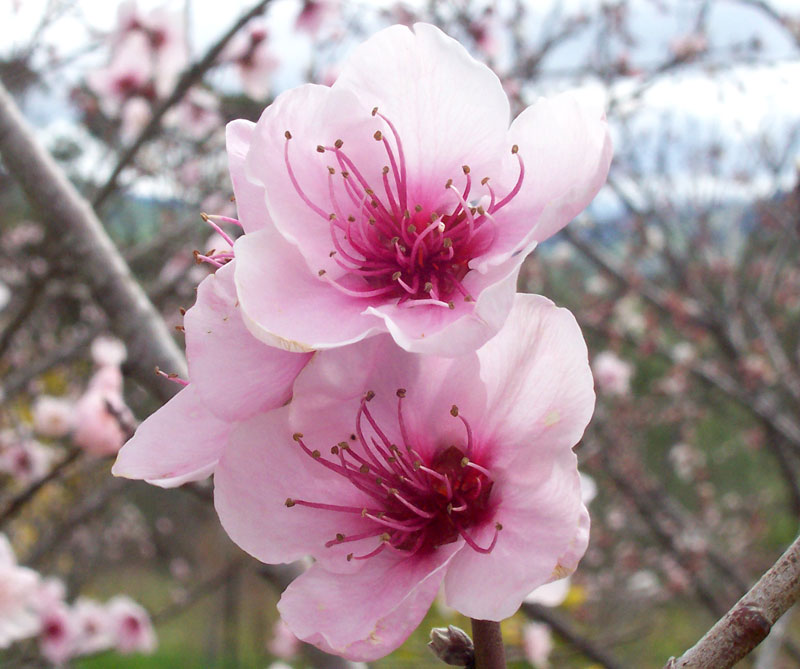
Japanese apricot is the earliest messenger of spring.


 weeping plum


Wednesday, February 15, 2023

Bonsai Daybreak Reflection


 Night rain mixed with the sleet gets the Japanese apricot wet. 
Delicate colors seem to be polished still more.


 Shine of the dawn lets me feel drops of water coolly.


It is the rare bonsai which pink and snow-white flower are mixed, and bloom. 
Fallen petals make up a base.


Thank you for your visit, always.  
I am grateful for your support.

I love you.
sincerely yours.

From Japan.


Saturday, February 4, 2023

Monday, March 18, 2019

Awakening season " Spring " Japanese calligraphy


Everything is getting clearer.
The joy will be filled.


梅が香に 昔をとへば 春の月 こたへぬ影ぞ 袖に映れる

藤原 家隆 < Fujiwara no Ietaka > ( 1158 - 1237 )  新古今和歌集 < Kokin Wakashū >


At this time everyone was waiting for.
The world will be illuminated.


み吉野は 春のけしきに かすめども 結ぼほれたる 雪の下草

紫式部 < Murasaki Shikibu > ( 970 ? - 1019 ? )  後拾遺和歌集 < Goshūi Wakashū >


" 春 " (shun・haru). It is translated as spring.

This character is written by Kanzi, Small seal script.

Etymology : It is Phono-semantic compound. 
semantic 艸 (“grass”) + phonetic 屯 (“sprout”) + semantic 日 (“sun”).


Inabe plum Festival (beautiful Japanese landscape)


Beautiful Japanese apricot


Then again he laid his hands on his eyes. He looked intently, 
and was restored, and saw everyone clearly.

Mark  8:25


それから、イエスが再び目の上に両手を当てられると、盲人は見つめているうちに、
なおってきて、すべてのものがはっきりと見えだした。

マルコによる福音書  8:25


Thank you for your visit, always.  
I love you.
sincerely yours.


Friday, March 9, 2018

Photos only #12 Plum blossom One scented day


Thank you for your visit, always.  
I love you.
sincerely yours.


Saturday, March 3, 2018

Signs of the spring " Ume " Japanese calligraphy


The Ume blossoms (Japanese apricot) have begun to bloom from the middle of February.


"梅" (bai, or ume). It is translated as plum, prune.
This character is written by Kanzi,
Regular script.

Etymology : Phono-semantic compound
semantic
木 (tree, wood)  +  phonetic 毎 (every)

The tree to tell about spring of every year.
The Ume blossoms may be the roles.


The Ume blossoms flower earliest in the Far East.
Thereafter,
cherry blossoms, peach blossoms will bloom in sequence.

The wind is still cold.


This post is a reorganization of February, 2010 edition.


Wisdom is supreme. Get wisdom. 
Yes, though it costs all your possessions, get understanding. 
Proverbs 4:7


Thank you for your visit, always.  
I love you.
sincerely yours.


Thursday, February 4, 2016

Photos only #07 " ZEN Japanese apricot in the snow "


Thank you for your visit, always. sincerely yours.


Sunday, March 8, 2015

Where are the scent from? with " Voice " Japanese calligraphy


I listened to the spring whisper.


梅の花  なににほふらん  見る人の  色をも香をも  忘れぬる世に
大弐 三位 (999 - 1082)   新古今和歌集

Plum blossom Why fragrant People to appreciate  Color and flavor Even though they've forgotten
Daini no Sanmi (999 - 1082)   Shin Kokin Wakashū


Idyllic day.

わかやとの  梅のたちえや  見えつらん  思ひの外に  君かきませる
平 兼盛 (? -991)   拾遺和歌集

My house Branch of apricot Whether looked?  Surprisingly You've come


Sunshine is gentle.

梅の花  匂ふ春べは  くらぶ山  闇に越ゆれど  しるくぞありける
紀 貫之 (872 - 945)   古今和歌集

Japanese apricot Spring scent Desolate mountain  Going darkness  Feel presence clearly


   " 声 " (sei, or koe). It is translated as voice.
   This character is written by Kanzi, Regular script.

   Etymology : Ideogrammic compound
    Clang the lithograph  +    Ear

The voice can be heard naturally. Although it is wonder what.
In both ears and mind.


Plum Blossoms in Kyoto.
Over the next two months. Kyoto is the most shining season.


だから、あなたがたは、神の力強い御手の下に、自らを低くしなさい。時が来れば神はあなたがたを高くして下さるであろう。
ペテロの第一の手紙 第5章 第6節

Humble yourselves therefore under the mighty hand of God, that he may exalt you in due time; 
1 Peter  5:6

God bless you.

Sunday, March 9, 2014

Weeping Japanese apricot with " Beauty " Japanese calligraphy


The color and the appearance is elegant.
It's like a messenger of spring.

Blooming has begun.


Gardener spent long years in pruning. 
for its small period. 

Light scent wraps us....


During few thousand years, apricot was the flower on behalf of Japan.
Many Waka has been dedicated to it.

To the crystal of the beauty


紅に 色をば変へて 梅の花  香ぞことごとに 匂はざりける
紀 貫之 (872 – 945)    後撰和歌集

to rouge  change the color  apricot blossom   scent will come floating around each 
Ki no Tsurayuki (872 – 945)  Gosen Wakashū


>


"美"(bi, or utsukusii) It is translated as Beauty.
This character is written by Kanzi, Semi-cursive script.

Etymology :  羊 (sheep)  +  大 (big, great)

The sheep has the meaning of the animal of the sacrifice with it used as a gift in religious service.
This letter may have expressed the beauty of the religious service.


梅の花 匂の深く 見えつるは  春の隣の ちかきなりけり
三統元夏 (? – ?)    拾遺和歌集

Flowering apricot  deep scent  I can feel   next to spring  approaching itslf   
Santou Genka (? – ?)  Shūi Wakashū


梅が香を たよりの風や 吹つらん  春めづらしく 君がきませる
平兼盛 (? –991)      後拾遺和歌集

scent of apricot  such as mail  wind is blowing   curiously thing  You visited in spring
Taira no Kanemori (? –991)  Goshūi Wakashū


Apricot is the blessed tree as the myrtle. And it may be similar.


いとすぎは、いばらに代って生え、ミルトスの木は、おどろに代って生える。これは主の記念となり、また、とこしえのしるしとなって、絶えることはない。
旧約聖書 イザヤ書 55章13節

Instead of the thorn shall come up the fir tree; and instead of the brier shall come up the myrtle tree: and it shall be to Yahweh for a name, for an everlasting sign that shall not be cut off.  
Old Testament Isaiah 55:13


God bless you.


.

Saturday, February 22, 2014

A week of heavy snowfall


Japan last week experienced a deep snow for the first time in decades.
Still, covering the earth.

I have come across for the first time in my life.


雪の内に  春はきにけり  うぐひすの  こほれる涙  今やとくらむ
二条后 藤原高子 (842-910) 古今和歌集 


In the snow  spring has come  tears spilling from  the bush warbler  will melt?
Fujiwara no Takaiko (842-910) Kokin Wakashū


み吉野は  山もかすみて  白雪の  ふりにし里に  春は来にけり
摂政太政大臣 九条良経 (1169-1206) 新古今和歌集 


Mountains of Yoshino  falling white snow  like hazy  in lonely village  spring has come
Kujō Yoshitsune (1169-1206) Shin Kokin Wakashū 


Severity of winter will further enhance the joy of spring.
Please take care of yourself.


ヒソプの枝で私の罪を払って下さい。私が清くなるように。    私を洗って下さい。雪よりも白くなるように。
詩編 51章 9節

Purify me with hyssop, and I will be clean. Wash me, and I will be whiter than snow.
Book 19 Psalms 51:9


God bless you.